Tuesday, December 3, 2013

Mystery of the Megaflood


The Mystery of the Megaflood discusses the channeled scablands in Washington. It discussed how the scablands were formed from, theoretically, a flood. It was very interesting to see how a flood could change so much in a land. 

Heritage Trail


The Ocmulgee Trail helps people to become more aware of the river and this allows it to better for everyone.


http://www.newtownmacon.com/projects/ocmulgee-heritage-trail/
http://www.maconga.org/listings/index.cfm?action=display&listingID=3990&menuID=27&hit=1

Trees

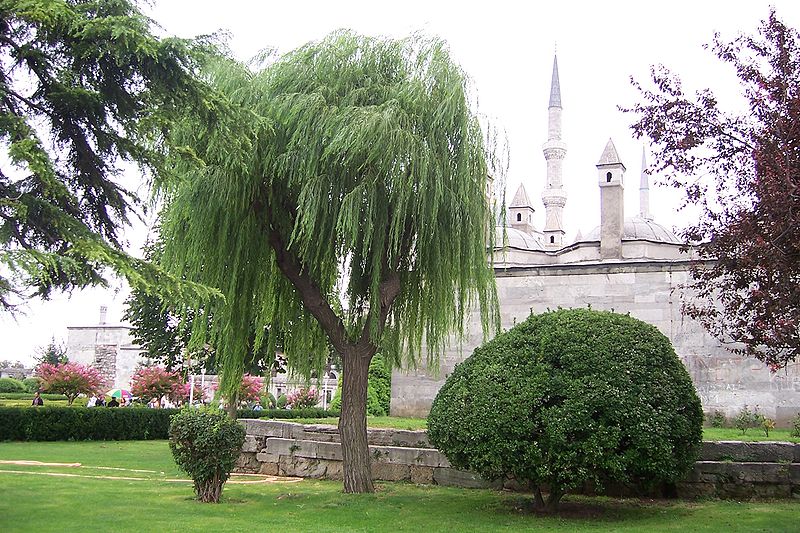
The weeping willow tree is a species of willow native to dry areas of northern China, but cultivated for millennia elsewhere in Asia It grows rapidly, but has a short lifespan, between 40 to 75 years. The shoots are yellowish-brown, with small buds.  The leaves are alternate and spirally arranged, narrow, light green, 4-16 cm long and 0.5-2 cm broad, with finely serrate margins and long acuminate tips; they turn a gold-yellow in autumn. The flowers are arranged in catkins produced early in the spring; it is dioecious, with the male and female catkins on separate trees.
File:Salix babylonica.jpg

Native southwestern cypress with soft- textured gray-green foliage and rough shredding gray brown bark. Very drought and heat tolerant. Excellent for windbreaks and erosion control, Christmas trees, or an ornamental. 

Arizona Cypress—Cupressus arizonica var arizonica

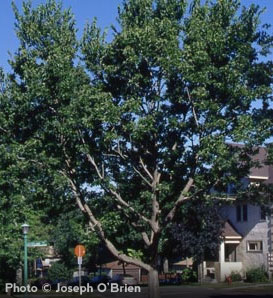
Tolerant of a wide range of conditions, the Hackberry is a good landscape choice. Grows to a broad crown with arching branches, not unlike the American Elm. Well-suited to urban areas, it withstands wind and city conditions.

Hackberry—Celtis occidentalis

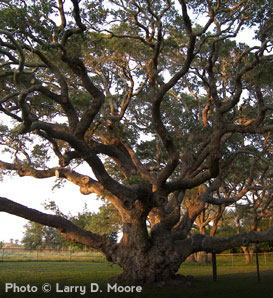
The Live Oak grows rapidly when young and may live to be centuries old. Adapts to almost any soil. Live Oaks can be used as street trees. Tolerant of salt spray. 

Live Oak—Quercus virginiana


12 Soil Orders

There are twelve different soil types in the United States spread throughout the country. The alfisols soils have an argillic, a kandic, or a natric horizon and a base saturation of 35% or greater.  The andisols include weakly weathered soils with much volcanic glass as well as more strongly weathered soils. The aridisols are too dry for mesophytic plants to grow. The entisols have little or no evidence of development of pedogenic horizons. The gelisols have permafrost within 100 cm of the soil surface and/or have gelic materials within 100 cm of the soil surface and have permafrost within 200 cm. The histosols are mostly soils that are commonly called bogs, moors, or peats and mucks. The inceptisols have lost bases or iron and aluminum but retain some weatherable minerals. The mollisols have a dark colored surface horizon and are base rich. The oxisols have gentle slopes on surfaces of great age. The spodosols are soils in which amorphous mixtures of organic matter and aluminum, with or without iron, have accumulated. The ultisols horizon that contains an appreciable amount of translocated silicate clay and few bases. And lastly, the vertisols have a high content of expending clay and that have at some time of the year deep wide cracks. Georgia is mostly made up of ultisols and a small amount of spodosols and inceptisols.

Communtiy Gardens

Community gardening is when a group of people(community) collectively use a single piece of land where they all garden together. Some positives of this would be that the community would be able to grow their own food by planting various fruits and vegetables. It is also a good way for a society to become closer by working towards one common goal.

 A communtiy garden in Ottawa, Canada